


The Web3 Legal Moment
Web3 began as a technological rebellion — a push to build systems that didn’t need central authorities, bankers, or gatekeepers. But now that it’s entering the mainstream, it’s facing a new frontier: the law.
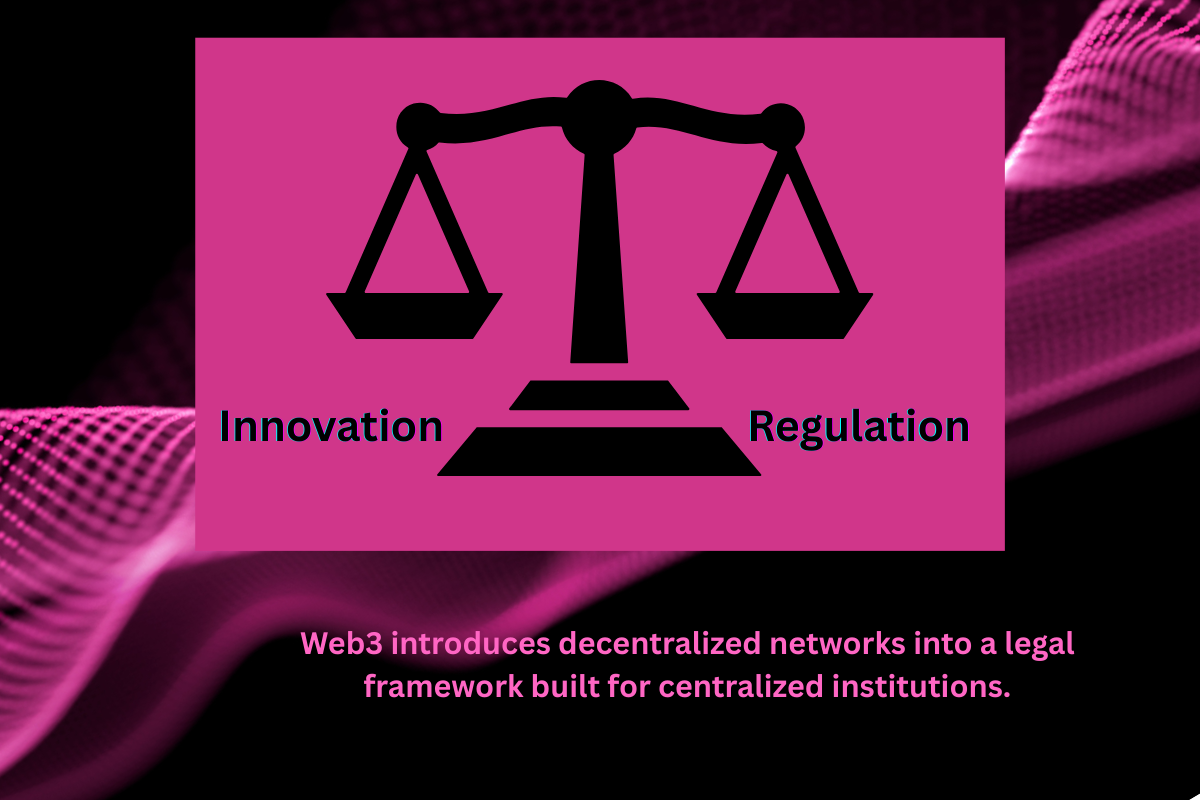
The paradox is striking. Web3’s core innovation is decentralization — removing intermediaries and redistributing control. Yet every business, from a two-person NFT studio to a multinational exchange, must operate within legal frameworks designed for a centralized world.
In 2025, that tension is peaking. Governments and regulators are catching up, court cases are setting precedents, and industry leaders are realizing that legal clarity isn’t the enemy of innovation — it’s the foundation for scaling it.
Why Legal Clarity Matters
For years, the Web3 ecosystem has operated in a gray zone — building first, interpreting later. That approach fueled innovation, but it also left founders, investors, and creators vulnerable.
Legal clarity affects everything:
- Token offerings determine whether your product is a community tool or a regulated security.
- DAOs challenge traditional corporate governance and liability.
- NFTs raise questions of copyright and resale rights.
- Data privacy laws collide with blockchain’s permanence.
- Taxes depend on how digital assets are classified.
Businesses that wait for regulators to “figure it out” risk falling behind. Those that engage early are already shaping the frameworks that will define the next decade of digital commerce.
Compliance doesn't slow innovation. It legitimizes it.
The Core Legal Pillars of Web3
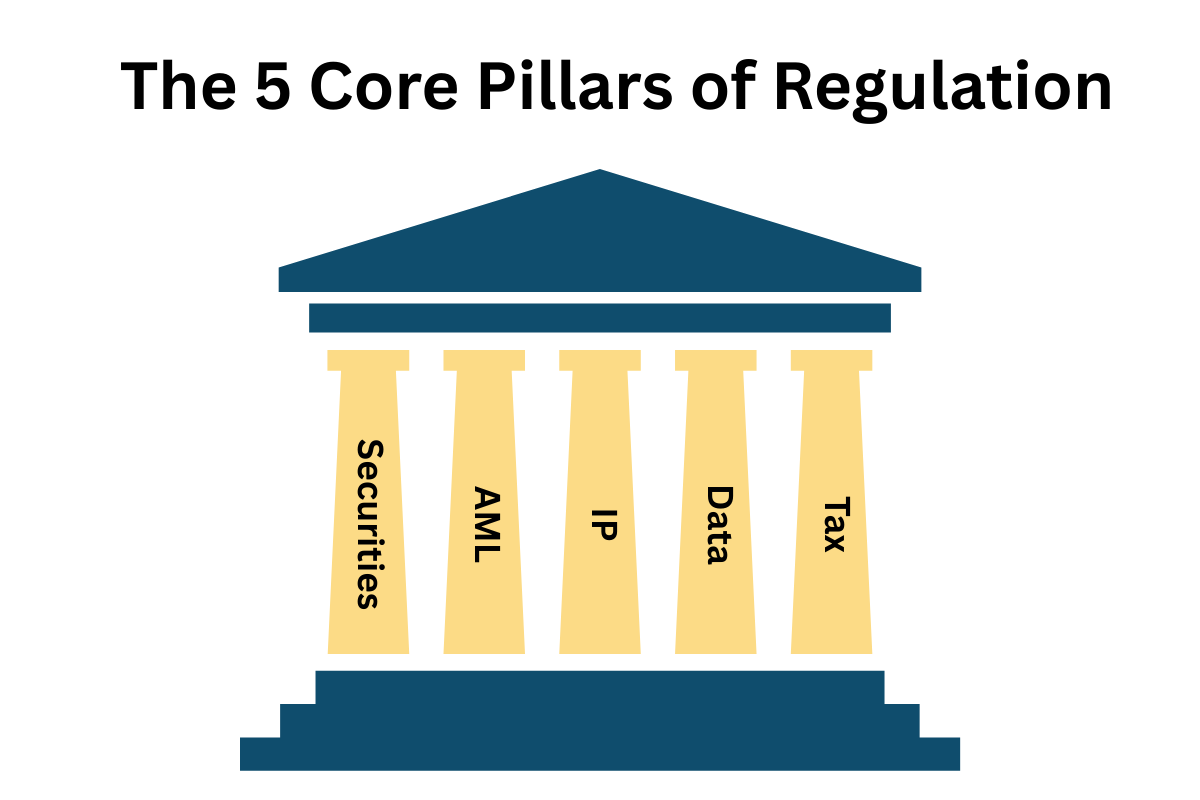
Web3 intersects with nearly every branch of law, but five pillars dominate current regulatory discussions:
1. Securities Law
At the heart of Web3’s legal complexity lies a simple question: When is a token a security?
In the U.S., the Howey Test defines a security as any investment where profits depend on the efforts of others. Tokens that pass this test fall under SEC oversight.
Globally, regulators are drawing similar lines, from the EU’s MiCA framework to the UK’s FCA guidance. The outcome determines whether a project needs registration, disclosure, and ongoing compliance — or can operate freely as a utility.
2. Money Transmission & AML
DeFi platforms, exchanges, and wallets increasingly fall under anti-money-laundering (AML) and know-your-customer (KYC) laws. Even “non-custodial” businesses face scrutiny over whether they facilitate transfers of value.
Web3 projects must now think like financial institutions, implementing transaction monitoring and identity safeguards — or risk enforcement actions.
3. Intellectual Property
NFTs and decentralized content have blurred the meaning of ownership. Buying an NFT doesn’t automatically grant copyright. Brands and creators must clarify licensing rights, derivative works, and usage terms in their smart contracts and marketplaces.
The same goes for DAOs producing media, art, or software — intellectual property still needs legal protection, even when governance is distributed.
4. Data Protection & Privacy
The GDPR and similar laws guarantee individuals a “right to be forgotten.” Blockchain, by design, doesn’t forget.
This clash raises critical design questions: how to store personal data off-chain, use hashes instead of direct identifiers, and ensure compliance while preserving transparency.
5. Taxation
From income to capital gains, digital assets are taxable in most jurisdictions. Yet few systems are built to track cost basis or cross-border token swaps.
Businesses must establish accounting systems that handle both on-chain and off-chain transactions — ideally integrating blockchain analytics tools to automate reporting.
Regional Snapshots — A Patchwork of Regulation
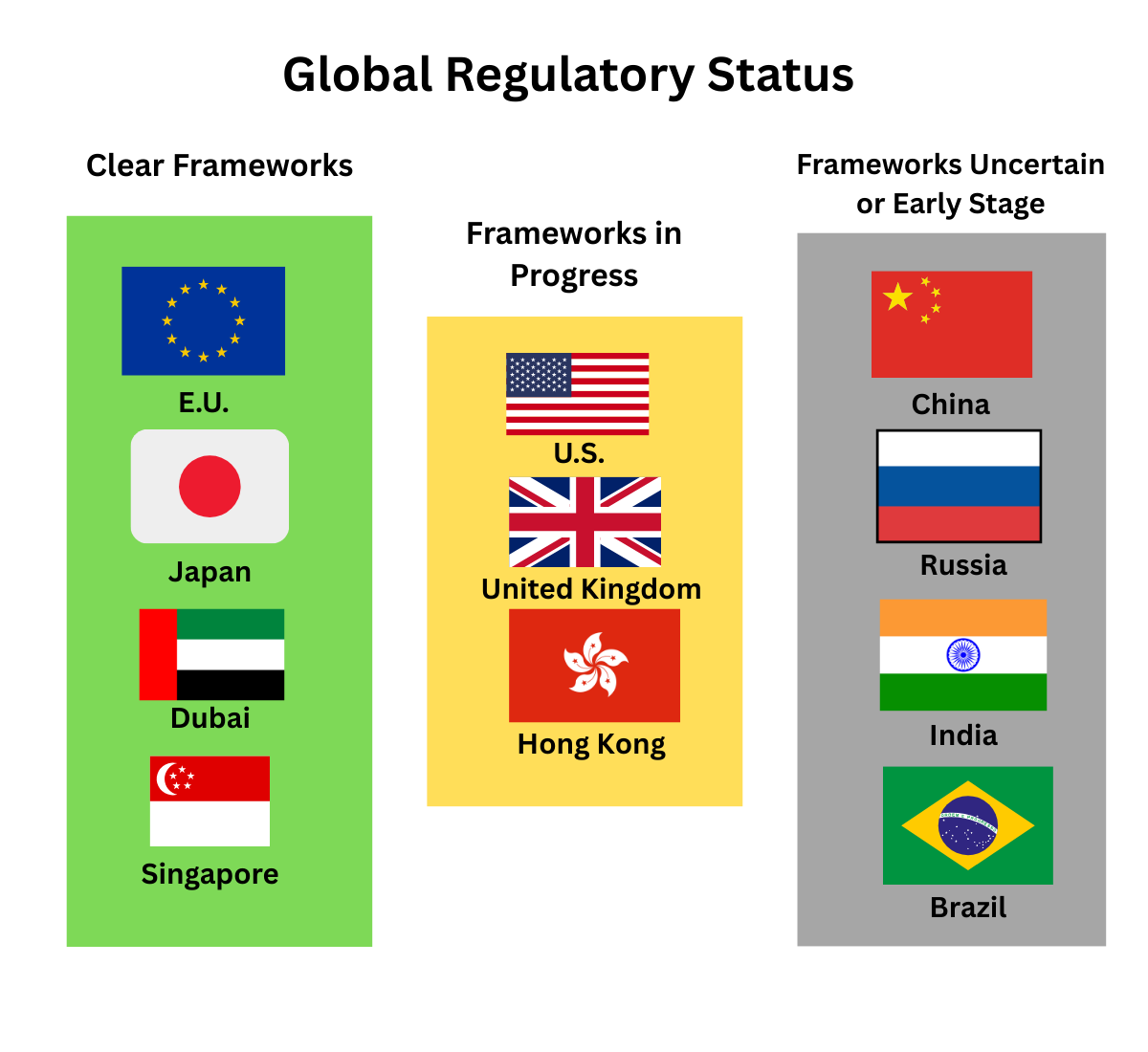
The Web3 legal map remains uneven, but key regions are beginning to converge on structured frameworks.
United States
The U.S. remains fragmented. The SEC classifies many tokens as securities, while the CFTC treats others as commodities. States have their own money-transmission laws. Despite the lack of unified guidance, enforcement has intensified.
Key takeaway: operate under the assumption that regulatory scrutiny will apply sooner rather than later.
European Union
The EU’s Markets in Crypto-Assets (MiCA) regulation — entering full effect in 2025–2026 — offers the clearest framework yet. It covers stablecoins, token issuance, and licensing for service providers. While strict, it gives Web3 projects a predictable path forward.
United Kingdom
Post-Brexit, the UK’s Financial Conduct Authority (FCA) is crafting its own Web3 approach. The focus is on consumer protection, stablecoin oversight, and transparency in marketing crypto products.
Asia-Pacific
- Singapore has become a hub for compliant innovation, requiring licensing but providing clear rules.
- Hong Kong is re-establishing itself as a digital asset center with a regulatory sandbox.
- Japan was early to enforce crypto laws, emphasizing consumer security and exchange accountability.
Middle East
Dubai’s VARA and Bahrain’s central bank have established dedicated frameworks, positioning the region as one of the world’s most forward-thinking jurisdictions.
Smart Contracts, DAOs, and Legal Personality
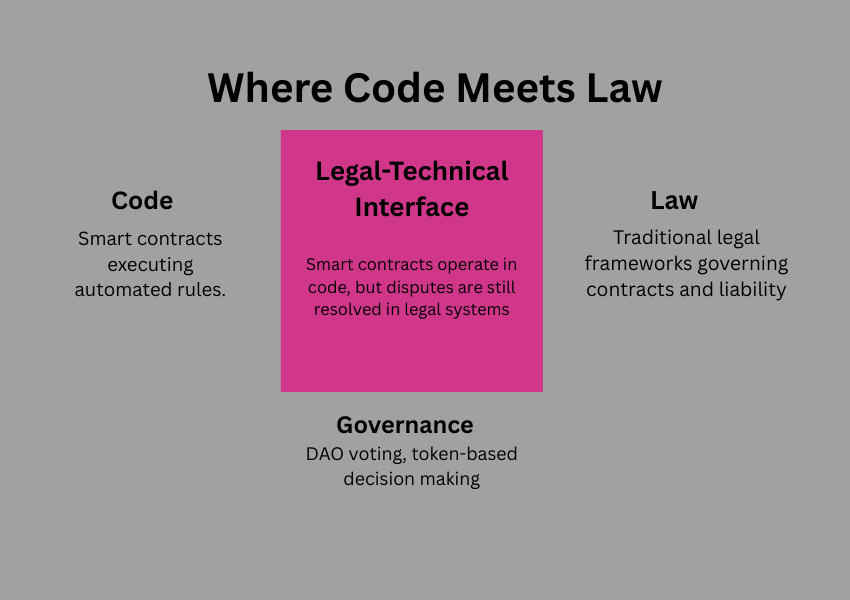
Smart contracts pose new questions about enforceability:
If code executes automatically, who is responsible when something goes wrong?
Meanwhile, DAOs (Decentralized Autonomous Organizations) introduce collective ownership without traditional incorporation. In Wyoming, DAOs can register as DAO LLCs, granting them limited liability. Elsewhere, legal ambiguity persists — leaving contributors exposed to potential personal liability.
In response, some projects adopt hybrid structures — combining off-chain legal entities with on-chain governance. This approach gives them the flexibility of decentralization while maintaining legal recognition.
Legal Risks in Practice
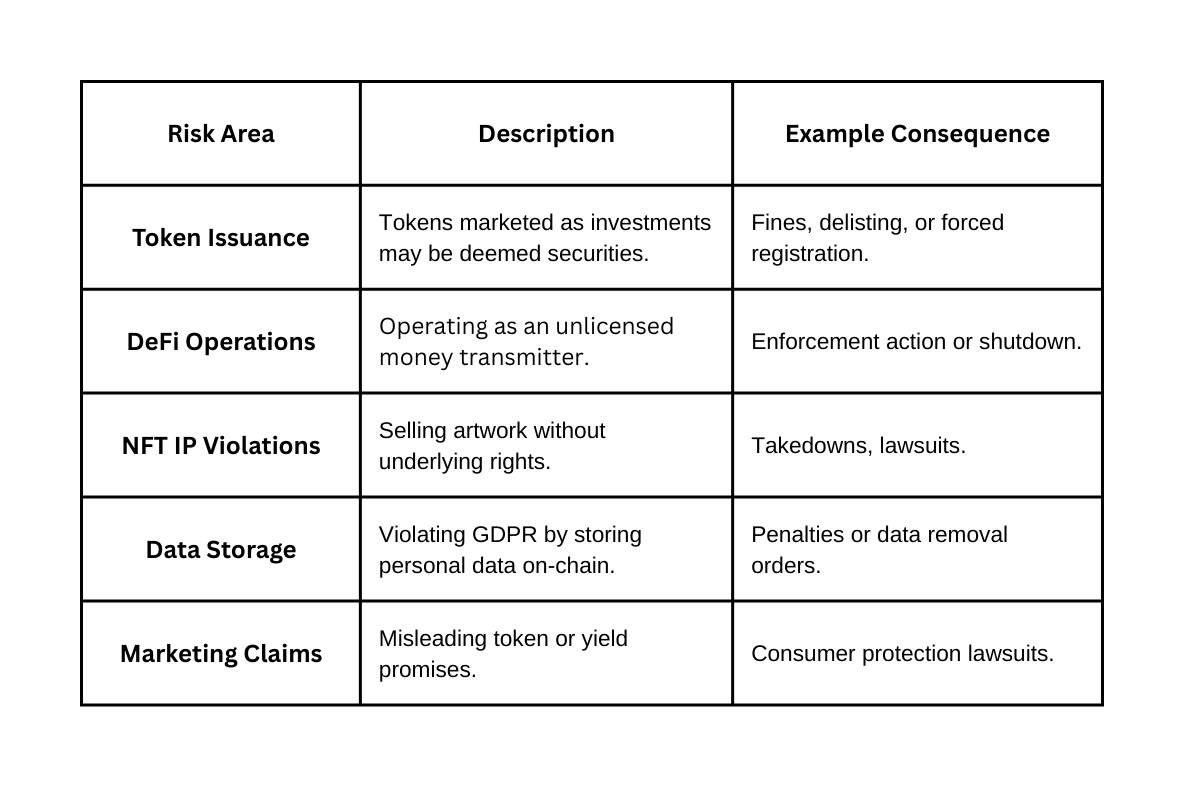
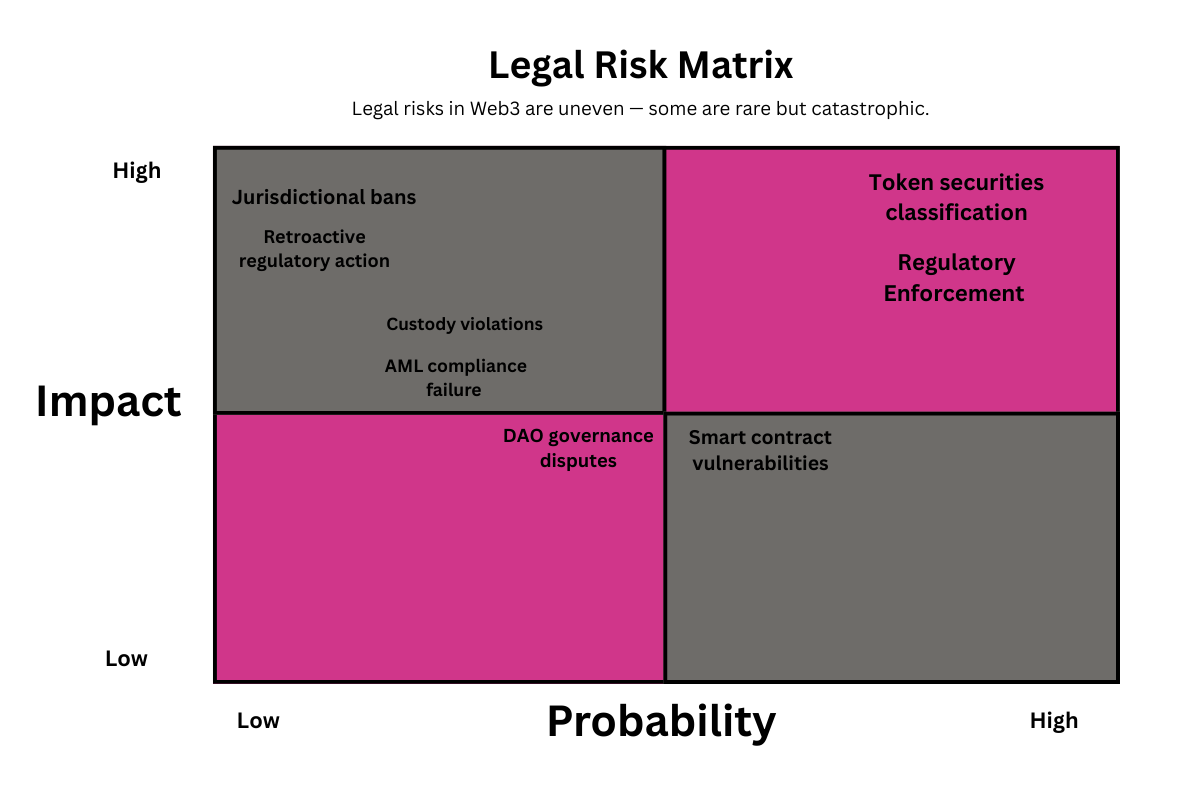
The most common pitfalls stem from failing to anticipate how existing laws apply to decentralized systems.
How Businesses Can Prepare and Adapt
You don’t need a team of lawyers to act responsibly — but you do need structure.
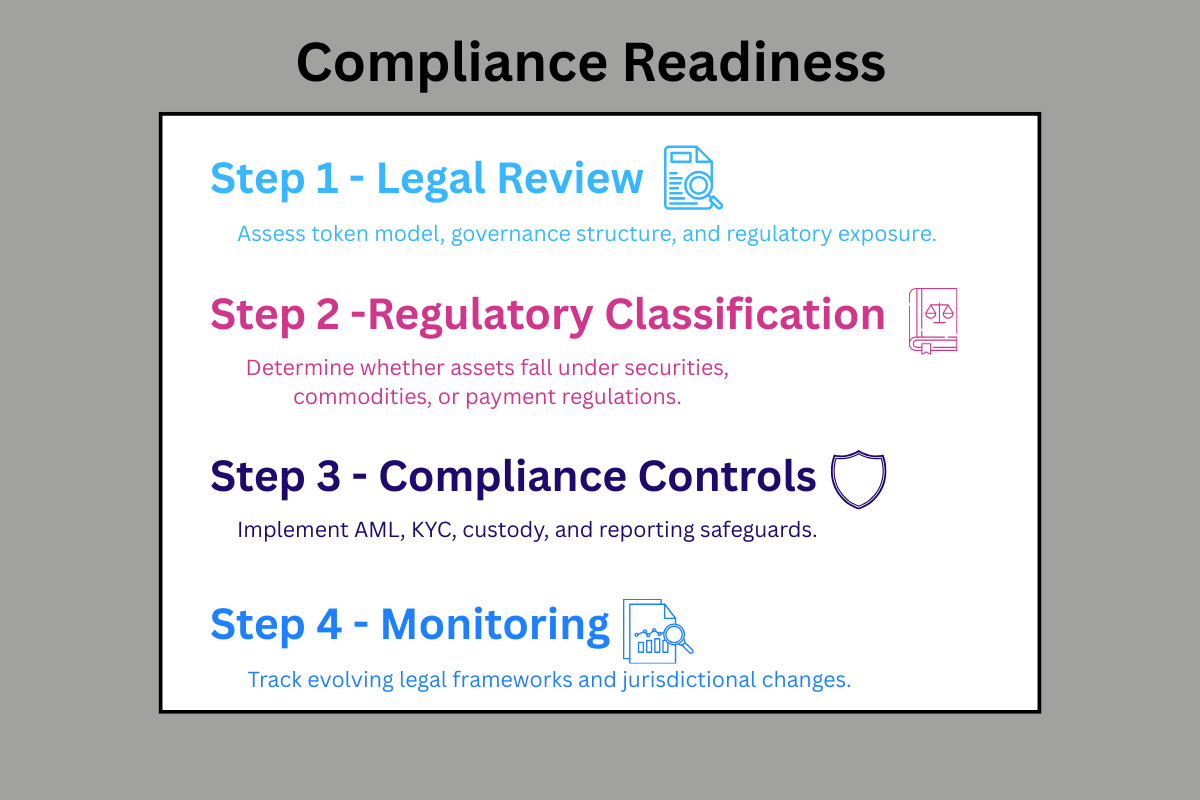
Here’s how businesses can begin turning legal awareness into strategic readiness:
1. Start with Legal Foundations
Retain counsel familiar with blockchain-specific issues. Web3 legal frameworks evolve weekly; specialized expertise is non-negotiable.
2. Audit Your Token Model
If you issue or use tokens — whether for access, loyalty, or investment — clarify their purpose and function. Seek early regulatory input when possible.
3. Build Compliance Frameworks Early
Develop basic KYC/AML processes, Terms of Use, and IP agreements before scaling. A small compliance budget today saves massive costs later.
4. Combine Code and Contract
Use hybrid models: a written legal contract referencing smart contract addresses or hashes. This creates enforceability in both code and court.
5. Monitor Global Trends
Assign someone on your team — or a partner firm — to track evolving policies. Regulatory landscapes change faster than most product roadmaps.
The Road Ahead — Toward Web3 Legal Maturity
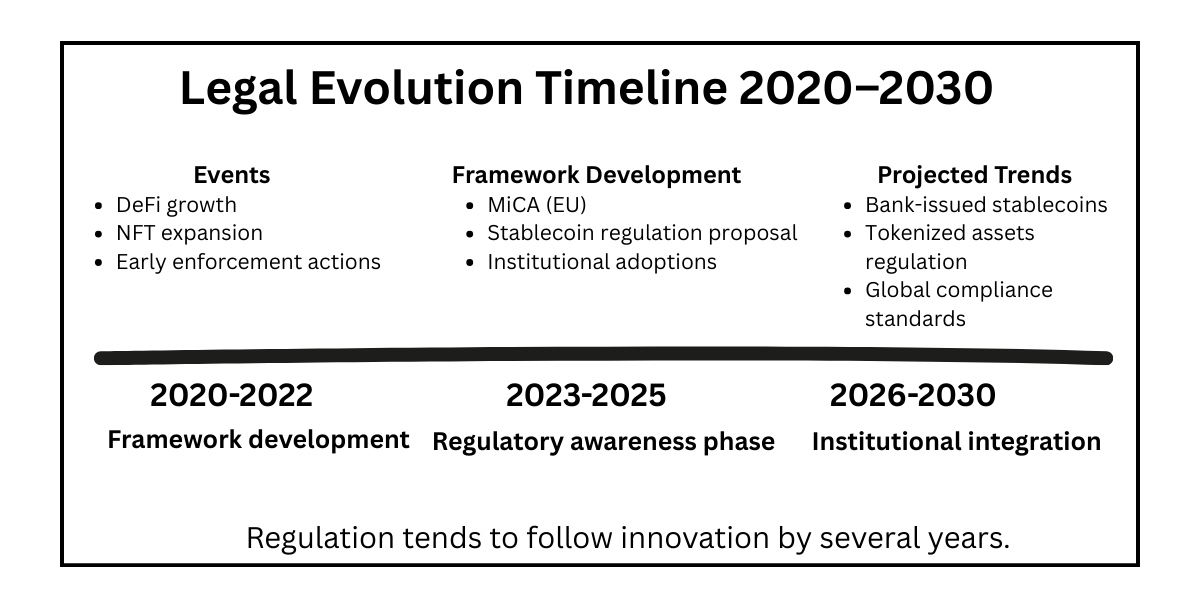
The next few years will define Web3’s legitimacy. Between 2025 and 2030, expect three major shifts:
- Convergence of Global Standards: MiCA-like regulations will become templates worldwide.
- Institutional Integration: Traditional banks, insurers, and governments will embrace blockchain once compliance pathways are clear.
- Automation of Compliance: Smart contracts will embed regulatory checks — verifying identities, taxes, and licenses in real time.
The most successful businesses will see compliance not as red tape, but as a competitive advantage.
Conclusion — Turning Risk Into Readiness
The Web3 legal landscape is evolving fast — but uncertainty shouldn’t lead to paralysis.
Instead, it’s an invitation to lead responsibly.
Every Web3 business now has two parallel roadmaps: one for technology, and one for governance. Both determine who will be here when the dust settles.
At Argot, we help organizations navigate that dual challenge — translating emerging regulations into smart, scalable frameworks for growth.