

1. The Promise and the Problem
If 2021 was the year of token launches, 2024 is the year of token redesigns. The excitement around tokens — as a new kind of digital asset, incentive, or governance mechanism — gave rise to thousands of projects. But too many followed the “launch first, figure it out later” model.
The result?
Unsustainable token economies that inflated fast, crashed faster, and left behind valuable lessons.
The next generation of Web3 businesses is building differently. They’re asking a more mature question:
How do we design tokens that actually sustain value — for users, investors, and the network itself?
2. What Tokenomics Really Means
At its simplest, tokenomics = token + economics.
It’s the science (and art) of how a token functions inside your ecosystem — how it’s created, distributed, used, and captured.
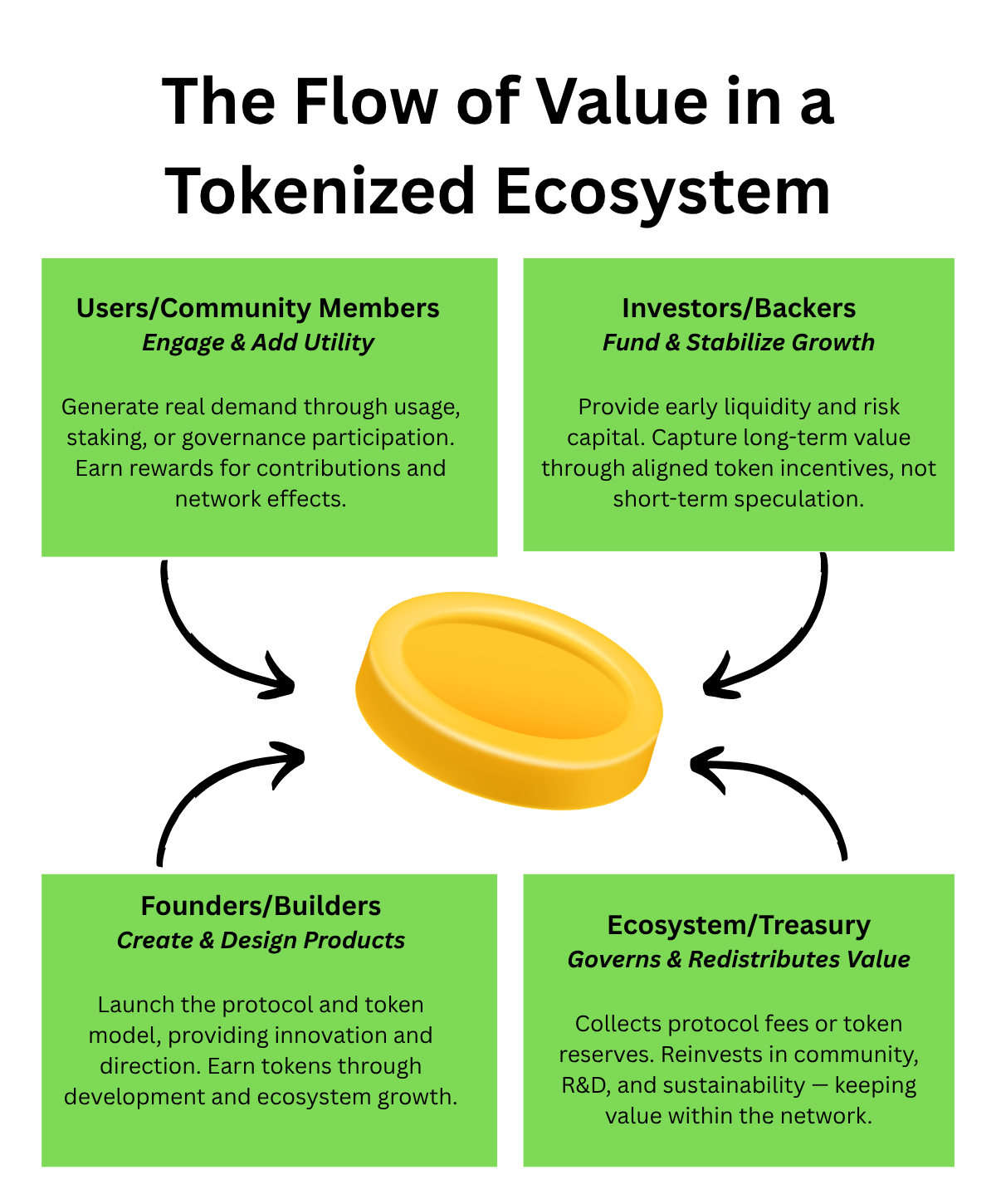
But in practice, tokenomics is business model design for decentralized systems. Instead of deciding how to price a product, you’re designing how value flows between participants.
Good tokenomics should:
- Incentivize productive behavior (use, participation, governance)
- Discourage speculation or abuse
- Align the long-term interests of founders, users, and investors
- Evolve as the project matures
In short, tokenomics is not about minting a currency. It's about engineering an economy.
3. The Core Building Blocks
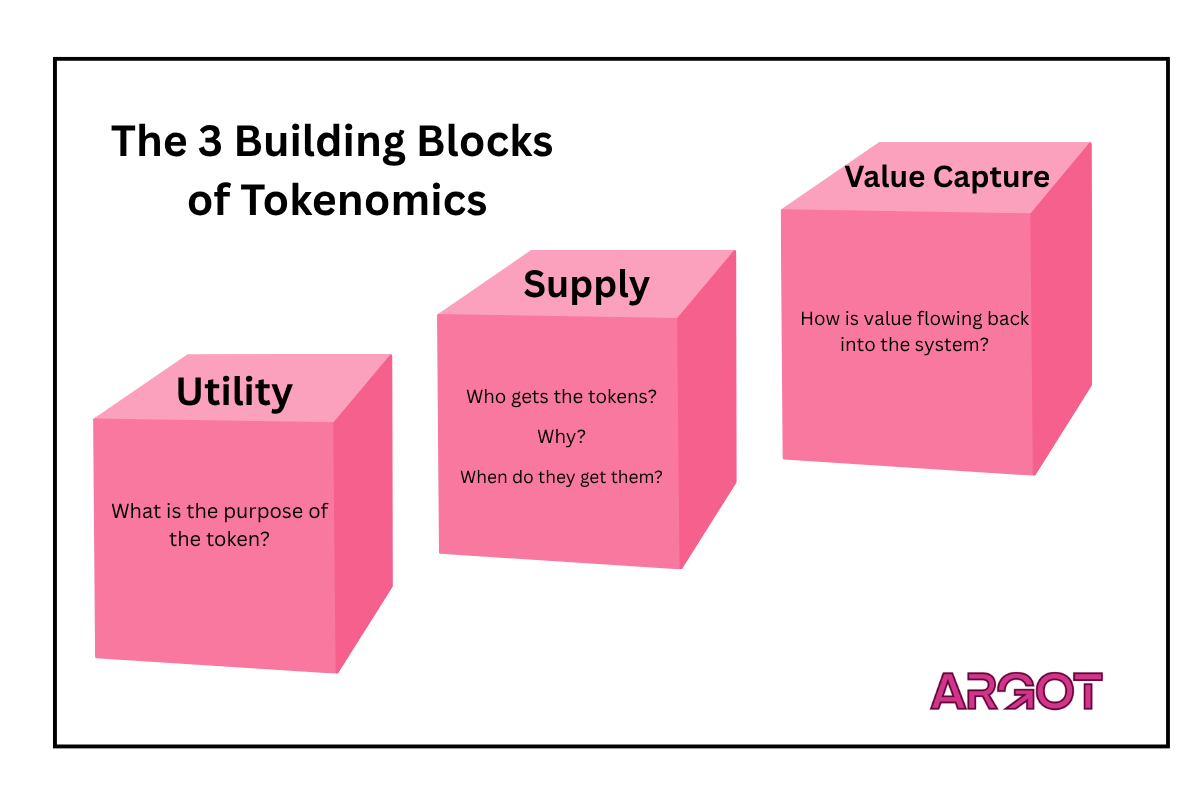
Every sustainable token model rests on three interlocking elements:
a. Utility
What purpose does the token serve?
- Access (e.g., subscription or membership)
- Exchange (e.g., in-app currency)
- Governance (e.g., voting rights)
- Reward (e.g., contributor incentives)
A token without real utility is a speculative placeholder.
Start with a problem — not a coin.
b. Supply and Distribution
Who gets tokens, when, and why?
Too much supply early → dilution.
Too little supply → friction.
Common tools:
- Vesting schedules to align contributors long-term
- Emission curves to manage inflation
- Treasury management to fund ecosystem growth
c. Value Capture
How does value circulate back into the system?
Think of this as your feedback loop.
Examples include transaction fees, staking mechanisms, or revenue-sharing models that sustain network health.
4. The Web3 Business Model Mindset
Traditional companies extract value.
Web3 ecosystems create shared value — ideally between founders, users, and investors.
That shift changes everything.
Instead of “How do we maximize profit?”, tokenomics asks:
“How do we build a system where everyone is motivated to grow the network sustainably?”
The most successful Web3 businesses are moving toward participatory capitalism — a model where users are stakeholders, not just customers.
Done right, tokenomics replaces marketing gimmicks with alignment mechanisms.
5. Case Studies in Sustainable Token Design
Ethereum (ETH)
ETH began as a utility token (fuel for transactions).
After EIP-1559, a portion of every transaction fee is burned, introducing a self-balancing, deflationary mechanism tied to network use.
Result: ETH’s long-term value is now correlated with actual economic activity.
Helium Network (HNT)
Helium’s original model rewarded hotspot operators with HNT tokens for building a wireless network.
When rewards became disproportionate, they redesigned the structure, adjusting emissions and redistributing incentives — a textbook example of responsive tokenomics.
Optimism (OP)
Optimism uses “retroactive public goods funding,” rewarding developers for past contributions that grew the ecosystem — a model aligning mission with monetary flow.
Each example reflects a key principle: Sustainability requires adaptability.
6. Avoiding Common Tokenomic Traps
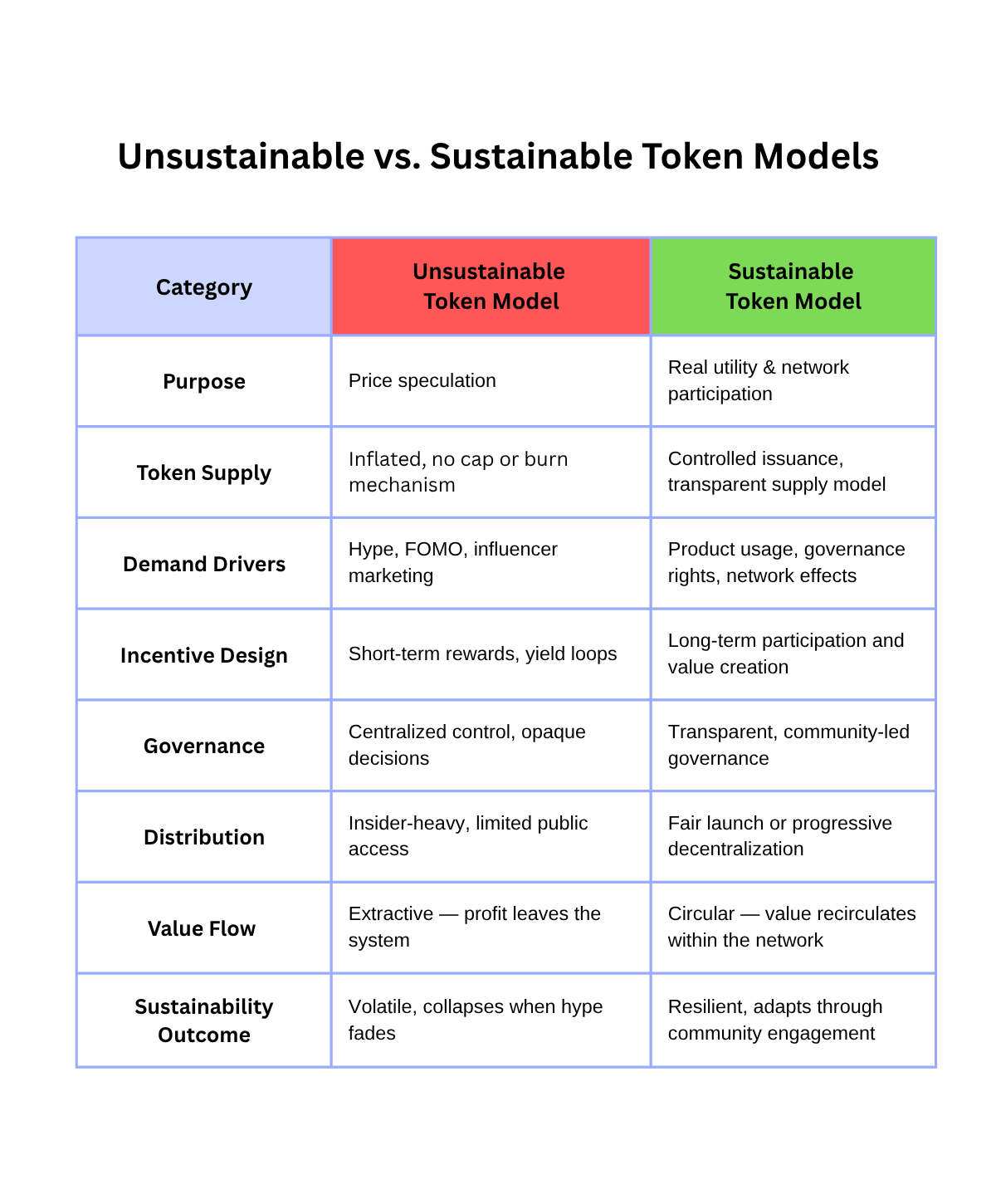
- Speculation over substance — If your token’s only value is future hype, it’s a time bomb.
- Misaligned rewards — Incentives that reward early actors but punish long-term participation destroy community trust.
- Poor treasury control — Overspending or unclear governance drains value faster than any market dip.
- Ignoring legal frameworks — Many “utility tokens” accidentally cross into securities territory. Regulatory foresight isn’t optional.
7. Designing for the Long Run
The best token economies evolve.
Early-stage projects may start with centralized decision-making and controlled supply. Over time, they can transition toward DAO governance and dynamic token adjustments.
A sustainable model is one that can:
- Reward contributors fairly
- Adapt to changing market conditions
- Preserve long-term token utility and confidence
That’s what makes tokenomics not a spreadsheet exercise, but a strategy discipline.
8. The Argot Takeaway
If Web2 was about monetizing attention, Web3 is about engineering participation.
For businesses, tokenomics isn’t a side feature — it’s the architecture of trust, value, and incentive that holds your entire model together.
At Argot, we believe token design isn’t just about launch mechanics — it’s about creating ecosystems that last.
Whether you’re designing a loyalty token, a governance model, or an entire economic network, start with this question:
“What behavior do we want to sustain — and how do we align value with it?”
That’s how tokenomics moves from buzzword to blueprint.